

38 Blessings of Life : ค้นหาหนังสือธรรมะ หน้า 79 / 86
หน้าหนังสือทั้งหมด
121
The Noble Eightfold Path: Ethical Conduct and Mindfulness
Stealing [adinnādāna]: Taking that which is not given;
Committing adultery [kāmesumicchācarā]: abstaining from sexual relations outside marriage.
5. Right Livelihood
The Lord Buddha taught his monks
This text discusses key principles of the Noble Eightfold Path, focusing on ethical conduct such as Right Speech, Right Action which includes abstaining from stealing and committing adultery, and Righ
124
Understanding the Inner Bodies and Enlightenment
the centre of the body, in the same way as described earlier, in entering the centre of the Pathama Magga Sphere, successive inner bodies can be attained, going further inside the subtle human body —
This text discusses the progression through successive inner bodies leading to the Dhammakāya, emphasizing the distinction between mundane and transcendental bodies. It highlights that all worldly bod
130
Understanding Mindfulness in the Mind
mind in the mind, it means mindfulness only of the sphere of central processing — and not the spheres of the mind involved with perception, sensory registration or cognition. It is no use having mindf
The text discusses mindfulness focusing on the central processing of the mind, distinguishing it from perception and cognition. It describes the clear nature of the pure mind that becomes tainted by d
150
The Power of Right View
so bhagavā" and "Namo buddhassa" before throwing the dice. By contrast, the boy from the family of False View would recollect the virtue of various heretics before throwing the dice with the words "Na
In this narrative, the contrast between Right View and False View highlights that those who hold Right View, symbolized by the boy from the family of Right View, always prevail. Through various incide
152
The Significance of the Triple Gem and Six Recollections
1. Recollection of the virtues of the Buddha with the words "Itipi so bhagavā arahant sammāsambuddho..."
2. Recollection of the virtues of the Dhamma with the words "Suākkhāto bhagavā dhammo..."
3. R
This text emphasizes the importance of recollecting the virtues of the Buddha, Dhamma, and Sangha, along with mindfulness of the body and the cultivation of compassion and loving-kindness towards all
153
Understanding Right View and Right Intention in Buddhism
[Image contains text and a circular symbol at the top]
4. The view that this world lacks reality or doesn’t exist;
5. The view that the afterworld lacks reality or doesn’t exist;
6. The view that
This text examines the principles of Right View and Right Intention in Buddhism. It highlights the dangers of False Views, such as denying the reality of this world or the afterlife, and emphasizes th
155
King Asoka: Patron of Buddhism
by inviting 60,000 monks for alms in the palace daily. The king wanted to have the chance to pay respect to a fully-enlightened Buddha and with this end in mind, invited the Naga King to come up from
King Asoka was a pivotal figure in Buddhism, inviting 60,000 monks for daily alms and yearning to pay respect to a fully-enlightened Buddha. He invited the Naga King to appear as the Buddha for homage
160
Abstention from Killing in Buddhism
4.1 Abstention from killing
Evil actions can be abstained from in any of the following three different ways:
1. abstention on the spur of the moment [sampattauirati];
2. abstention by having requested
This text discusses various ways one can abstain from killing, highlighting three methods: spontaneous abstention, preemptive abstention through the Five Precepts, and transcendent abstention. Illustr
168
The Importance of Right Livelihood in Buddhism
The Buddha said that a person who earns their living by Wrong Livelihood is like someone who intentionally advises a traveller to take a dangerous road, saying that it is safe, but when travelling the
This text discusses the concept of Wrong and Right Livelihood according to Buddhist teachings. It highlights the story of Seriva, a merchant who contrasts moral integrity with a greedy counterpart, de
169
Understanding Right Livelihood and Right Effort in Buddhism
but the bodhisattva urged him on. The merchant, realizing what he had lost through his greed choked up blood. It was at this time that he vowed to get his revenge on the bodhisattva in every future li
The text discusses the principles of Right Livelihood and Right Effort in Buddhism, exemplified by the bodhisattva's encounter with a greedy merchant. The merchant's greed leads to his demise, contras
189
The Path to Enlightenment: Insights from Bahiya Dārucīriya
people cite examples of enlightenment such as that of Bahiya Dārucīriya who, in his final lifetime didn’t appear to mediate, but could become enlightened just by hearing a few words from the Buddha at
In examining the enlightenment of Bahiya Dārucīriya, it is essential to recognize his previous lifetimes where he dedicated himself to achieving enlightenment through intense meditation. Alongside fel
191
The Significance of the Dhammacakka Pavattana Sutta
Siddhattha's footsteps. When Siddhattha was training him-self under the auspices of Ālara and Udaka it was Koṇḍañña who was also to train himself in Siddhattha's footsteps. Thus, Koṇḍañña, along with
The Dhammacakka Pavattana Sutta is pivotal in Buddhism, offering a master-plan for all subsequent teachings by the Buddha. It was delivered to a group of five adept meditators, setting a clear framewo
193
The Subtlety of Dhamma and the Buddha's Vocation
Dhamma in even greater subtlety. The Buddha was later to preach in the Simsapa forest that there were more leaves in the forest than he held in the palm of his hand. The 84,000 units of Dhamma which
The Buddha preached the concept of Dhamma, comparing his teachings to leaves in his hand versus the endless phenomena of enlightenment. He remembered his vow to end suffering, driven by compassion for
194
Choosing the Right Disciples in Buddhism
so many lifetimes in his past of pursuing Perfections, still
had to waste six years in the discovery of the Dhamma, stak-
ing his own life for the knowledge — how much harder
would it be for others to
Through his past lifetimes and pursuit of Perfection, the Buddha dedicated six years to discover the Dhamma. Acknowledging the difficulty others may have in understanding, he chose his first disciples
195
The Buddha's First Sermon: A Journey of Enlightenment
just passed away seven days ago and would now have to spend an exceedingly long lifetime in the formless Brahma-world. He might not even have the chance to hear the teachings of the next Buddha, let a
This excerpt discusses the profound moment in the Buddha's life when he sought to teach meditation after renouncing worldly comforts. He encountered obstacles as potential disciples Udaka Rāmaputta an
200
The Middle Way and the Four Noble Truths
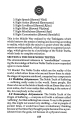
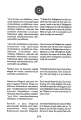
3. Right Speech [Sammā Vācā]
4. Right Action [Sammā Kammanta]
5. Right Livelihood [Sammā Ājīva]
6. Right Effort [Sammā Vāyāma]
7. Right Mindfulness [Sammā Sati]
8. Right Concentration [Sammā Samādhi]
This text discusses the Middle Way as taught by the Tathāgata, emphasizing the importance of Right Speech, Action, Livelihood, Effort, Mindfulness, and Concentration as a means to attain insight and e
215
The Tathāgata and the Cycle of Enlightenment
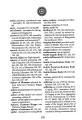
Yāva kivāñca me bhikkhave, imesu "O! Monks! If the Tathāgata had not fully com-
catusu ariyassaccevaṁ tiparivattaṁ completed these three cycles with their twelve com-
dvaḍasākāraṁ yathābhuṭṭaṁ nān
In this text, the Buddha addresses monks, emphasizing that he has fully completed the three cycles of truth, which affirms his status as a fully self-enlightened Buddha. He claims that this enlightenm
232
Exploration of Metaphors in Buddhist Philosophy
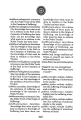
snake, poisonous, mistaken for rope spire, a palace - {metaphor for Mid-
- {metaphor for self-mortification dle Way 38-9} 36}
spouses, categories of 154-6
snake - {metaphor for craving 88}
sprite, ear
This text explores several metaphors used in Buddhist philosophy, including the snake as a metaphor for craving and its relationship to the concept of suffering. It further elaborates on the significa
240
Understanding the Noble Truths and Suffering
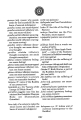
dukkhanirodhagāminī ariyasacca knowledge that what must be done in relation to the Noble Truths has been done (see the Noble Truth of the Path to the Cessation of Suffering)
dukkhanirodhagāminī kat
บทความนี้สำรวจและอธิบายเกี่ยวกับความจริงอันสูงส่งเกี่ยวกับความทุกข์และเส้นทางในการบรรเทาความทุกข์ตามหลักธรรมของพุทธศาสนา เนื้อหาครอบคลุมถึงความรู้ในด้านต่างๆ ที่เกี่ยวข้องกับแนวทางการดับทุกข์ รวมถึงปร
241
Understanding Sensory Terms in Buddhism
gammo (adj. reason why people icchā (see jealousy)
settle for the household life: see iddhipada (see Four Foundations
harm of sensual-indulgence) of Success)
gandha (scant: see sense-objects) Indra (P
This text delves into various sensory terms found in Buddhist scriptures, particularly focusing on olfactory and gustatory experiences. It covers concepts such as gandha (smell), jihvā (taste), and th